














Regenerative medicine in orthopedics
Content
Description
Regenerative medicine in orthopaedics uses methods to regenerate (rejuvenate) tendons, cartilage, ligaments and tissues. It accelerates healing, reduces pain.
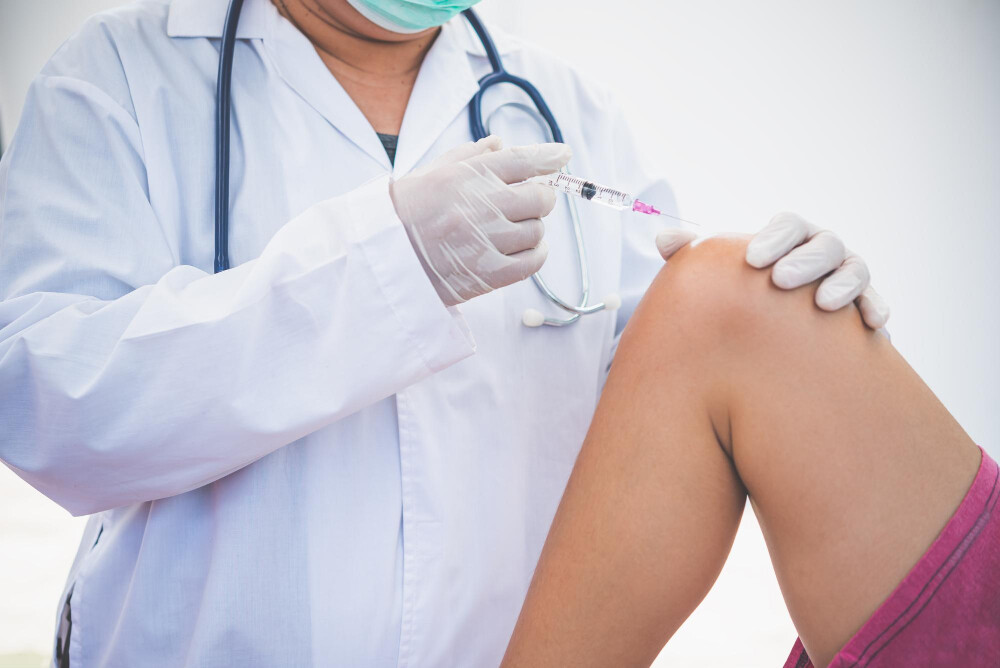
Hyaluronic acid, low molecular weight peptides, PRP and stem cells are used. These preparations are applied as injections into joints and surrounding tissues (e.g. Achilles tendon).
Regenerative medicine is suitable for arthrosis, inflammation, postoperative pain, arthritis.
Facts
- Local anesthesia
- Outpatient procedure
- Procedure lasts 60 - 90 min
- Procedure in several sessions
- Hyaluronic acid - known from aesthetic medicine as a moisturizing and filling material, is applied as injections into joints (shoulder, knee, hip joint) for the treatment of pain, inflammation, arthritis. Usually 3 - 5 doses are administered, which replace hyaluronan in the joints and stimulate its production. Modern are low-molecular peptides that are obtained by hydrolysis of collagens (they are suitable for cartilage regeneration). The effect lasts 6-12 months.
- Stem cells - undifferentiated stem cells are naturally occurring cells whose task is to replace missing specialized cells in tissues, they are activated during healing. They are found in larger quantities in adipose tissue and bone marrow. They are taken from the fat during lipografting and after processing applied to the damaged area. They reduce inflammation, regenerate tissue.
- Platelets - Platelet Rich Plasma (PRP) treatment. Plasma and platelets contain growth factors and proteins that stimulate healing, regeneration and repair. The advantage is the use of the patient's own blood - 10 ml (after collecting the own blood, the blood is centrifuged and plasma with platelets is collected). 4 - 6 sessions are used.