







Arthroscopy
Content
Description
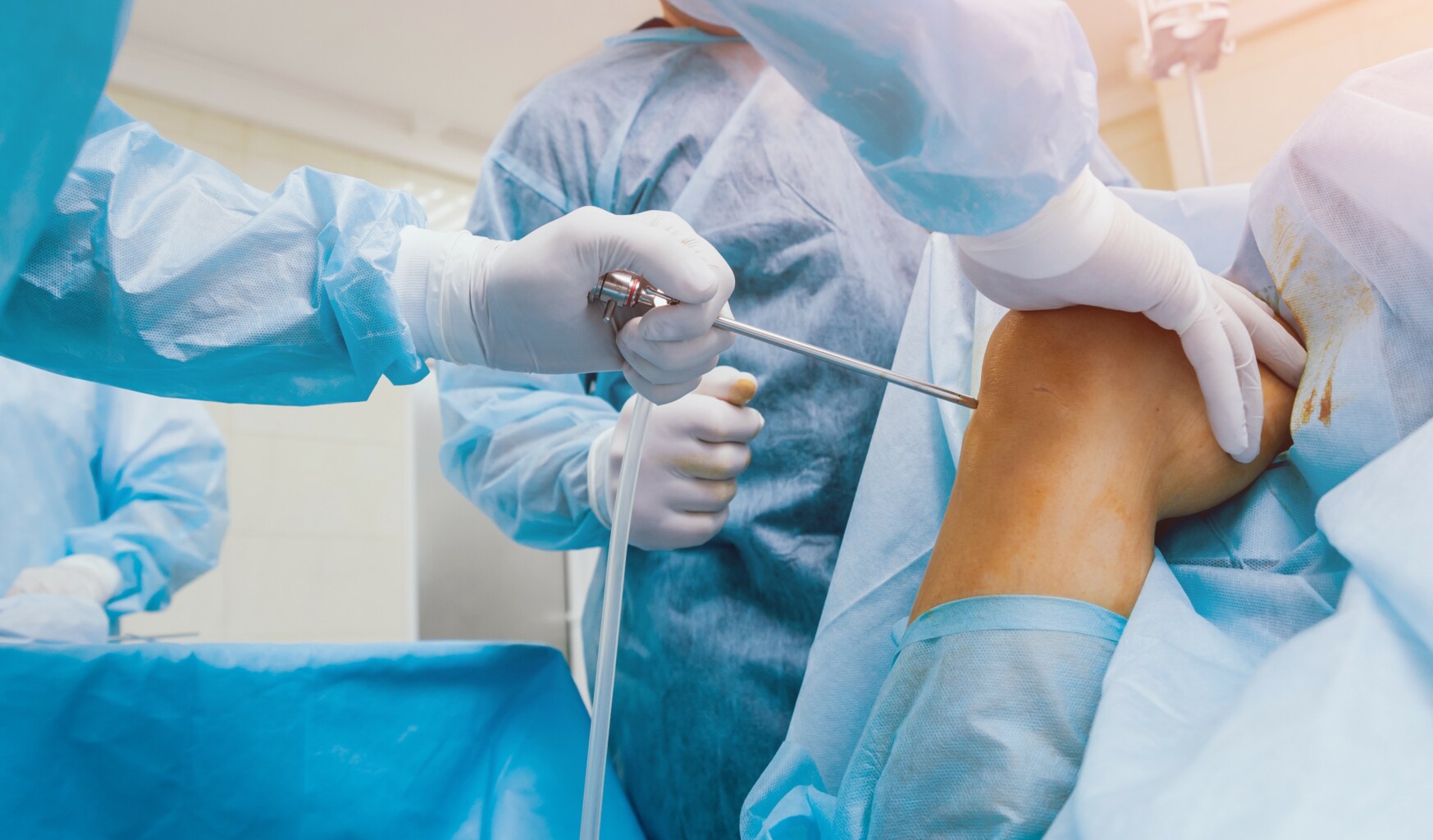
Arthroscopy is a minimally invasive endoscopic surgery in which a camera (arthroscope) and a trocar instrument are inserted into the joint through 2 tiny holes. The inside of the joint is visualised.
- With the help of arthroscopy, it is possible to visualize the joints (knee and ankle, shoulder, elbow, wrist) and diagnose the disease or treat the joints.
- Arthroscopy is successfully used to treat the soft parts of the joints (cartilage, joint capsules, ligaments and menisci on the knees). In this way, the orthopedist can abrade damaged cartilage, remove scars and adhesions after injuries and treat the joint capsule. Also to treat ruptured menisci on the knee, to stabilize the joint capsule in case of repeated dislocations.
- Reconstructive arthroscopy is used to repair the anterior cruciate ligament of the knee and reconstruct the rotator cuff of the shoulder.
Facts
- General, spinal, epidural anesthesia
- One-day surgery
- Procedure takes about 60 minutes
- Recovery in 7 days or longer
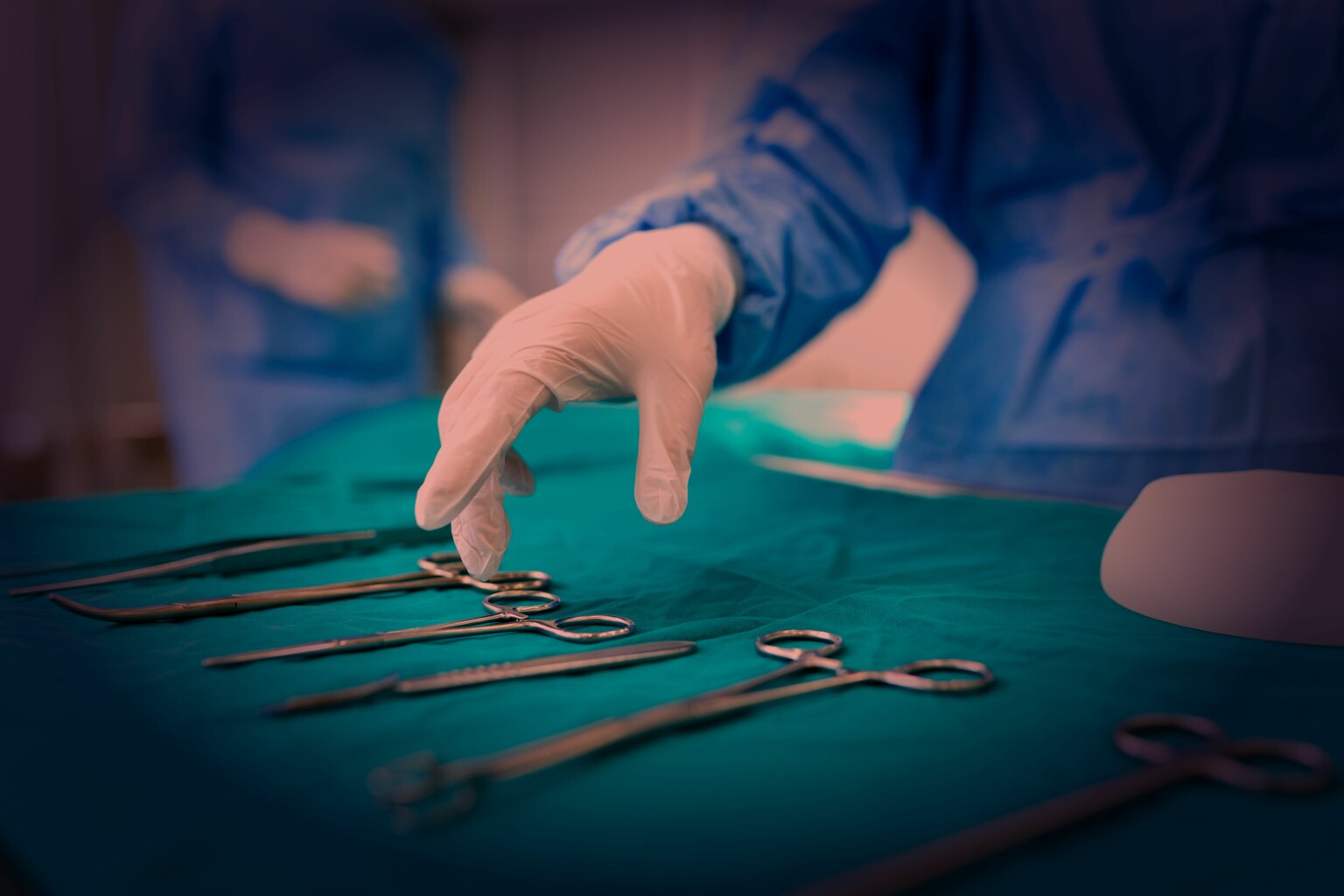
Arthroscopy is performed under general or epidural anesthesia. The orthopedist opens the joint using 2 - 3 small incisions (around 1 cm), introduces an optical device (arthroscope) and surgical instruments into the joint.
The procedure can be performed as part of a one-day surgery.
After the procedure the joint is gradually loaded over 7 days, the limb must be relieved - for example, by walking on crutches, physical activities can be started after 2 - 3 weeks.
In more complex operations with joint reconstruction, gradual rehabilitation with walking with crutches is required with a recovery period of about 6 months.
Knee arthroscopy is one of the most common arthroscopic operations. The advantage of this mini-invasive method is the possibility of diagnosing knee diseases using a camera and surgical treatment of soft tissue diseases of the knee.
Arthroscopy is performed for long-lasting knee pain, joint instability and knee diseases: torn and damaged meniscus, torn anterior cruciate ligament (ACL), synovial inflammation, cartilage damage, loosening of bone and cartilage fragments, disease and instability of the ball joint (spherical end of the bone), infection in the knee.
After arthroscopic surgery, it is necessary to protect the knee by walking on crutches for 1 - 2 weeks. After major operations, it is necessary to wear a knee brace (after meniscus surgery, the healing time is 6 weeks). An important part of the treatment is rehabilitation, riding a stationary bicycle, swimming is suitable.
The wrist is composed of eight tiny bones that are connected by strong ligaments. Arthroscopy enables diagnosis as well as treatment of wrist joints - for example: treatment of inflamed synovium (so-called synovectomy), treatment of damaged ligaments, treatment of damaged cartilage, arthritis and tears in TFCC (triangular fibrocartilage complex).
After the surgery a splint or orthosis is worn and gradually rehabilitated.
With the help of arthroscopy it is possible to treat tennis elbow and golfer's elbow, as well as cartilage damage and some fractures, scar tissue and bone growths, osteoarthritis (infection).
- Tennis elbow (radial epicondylitis) is a disease caused by overloading of the tendons that tighten in the area of the outer elbow.
- Golfer's elbow (ulnar epicondylitis) is very similar to tennis elbow, but the pain is on the inner side of the elbow. It is less common than tennis elbow. It is also referred to as a Spearman's elbow.
The return to sports after the procedure is after 4 months.
The shoulder is a very mobile joint, its injuries, dislocations and cartilage and tendon diseases are frequent.
Arthroscopy can treat:
- Shoulder impingement (shoulder bumping into the scapula when lifting the shoulder)
- Rotator cuff tears (injury to the muscles and tendons of the shoulder)
- Shoulder instability
- Damaged cartilage, ligaments and bony growths
- Frozen shoulder (stiffness of the joint capsule of the shoulder - adhesive capsulitis)
- Others (tendinosis of the long biceps tendon, Bankart lesion, labral tears: SLAP (superior labrum anterior to posterior) - damage to the upper part of the shoulder at the point of biceps abduction)
The operation takes place under general or regional anesthesia. After surgery the arm is immobilized in a brace.
The ankle is often injured during a sprain (distortion) and in the case of more serious damage to ligaments, tendons, cartilage and bone tissue, arthroscopy is the most suitable type of treatment due to its minimal invasiveness.
- Bone ingrowths and spurs cause bone impingement syndrome
- Thickened ligaments in turn soft-tissue impingement (common in soccer players)
Impingement is manifested by pain that usually comes 3 - 6 months after the injury.
The ankle can be painful also with degenerative changes caused by inflammation.
Hip arthroscopy is used to diagnose and treat problems within the hip joint.
The condition of the joint surfaces can be assessed by direct visualization and dysplasia of the hip joint can be assessed, inflammation of the fluid in the joint (synovitis) can be treated, labral tears (a ring of cartilage) and femoroacetabular impingement - FAI can be treated.