

















Prostate Enlargement (Benign prostatic hyperplasia - BPH)
Content
Description
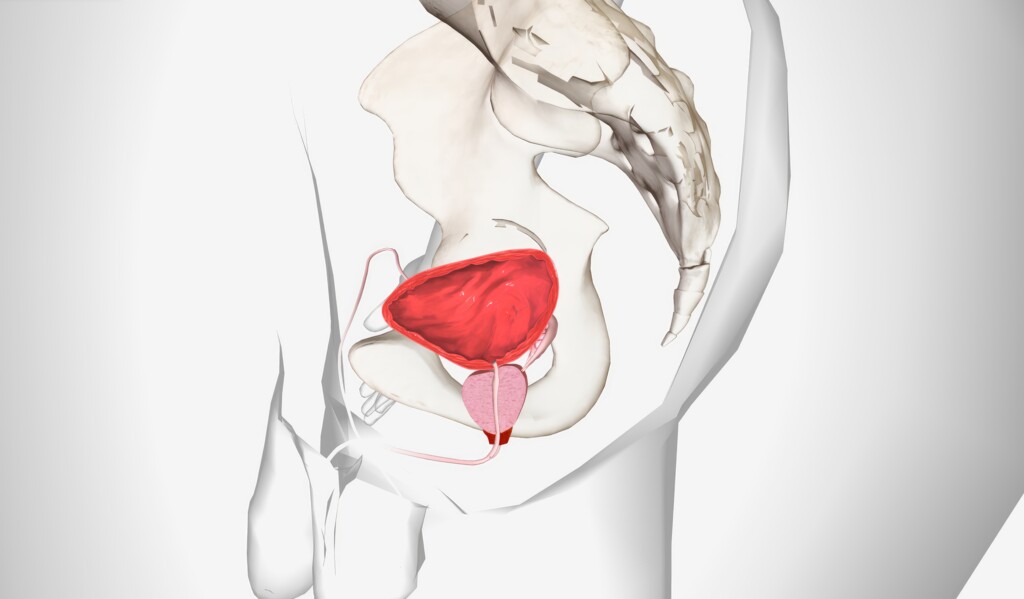
The prostate (prostate gland) is a male gland that can enlarge in older age (we talk about benign prostatic hyperplasia - BPH), causing problems with urination due to pressure on the lower urinary tract.
Classic symptoms are higher frequency of urination, nocturnal urination 2 - 3 times, weak urine stream, urge to urinate.
Enlargement of the prostate is related to hormonal changes that appear after the age of 50. A thorough examination by a urologist is necessary to establish a diagnosis.
Facts
- General or spinal anesthesia
- Outpatient procedure or Stay in hospital for 2-3 days
- Procedure lasts 60 minutes
- Recovery in 5 days
Treatment is possible with medication (alpha blockers, 5-alpha-reductase inhibitors, antimuscarinics, beta-3-agonists, phosphodiesterase-5 inhibitors and herbal preparations), in later stages surgical treatment is already indicated.
Among surgical interventions, we distinguish classical surgical interventions:
- Transurethral resection of the prostate (TURP) and transurethral incision of the prostate (TUIP) are endoscopic operations with resection of part of the prostate, performed under anesthesia from the waist down (spinal anesthesia) or under general anesthesia.
- Photoselective vaporization of the prostate (PVP) – A green laser applies energy that vaporizes the prostate
- Holmium laser enucleation of the prostate (HoLEP) – endoscopic removal of the prostate with a laser beam
- Transurethral electrovaporization (TUVP) - an electrode uses an electric current to vaporize prostate tissue
EchoLaser thermal ablation is one of the newest and least invasive methods of treating benign prostatic hyperplasia (BPH) for men who do not want to undergo major surgery in a hospital and do not want to take medication.
- Thanks to the EchoLaser device, the affected area is precisely located with the help of ultrasound navigation, and thermal ablation of the prostate is then performed with a laser.
Water vapor thermal therapy (WVTT) - by heating the prostate using water vapor from an inserted therapeutic catheter, we reduce prostate tissue (also called Prostate steam treatment - Rezum)
A prostatic stent - the narrowed space of the urethra is expanded by introducing an expansion stent.
Bloody urine appears after the procedures, major operations require catheterization of the bladder for several days (urinary catheter inserted through the penis).
Minimally invasive procedures are generally more gentle, some can be performed on an outpatient basis and have a faster recovery.
The appropriate type of procedure also depends on the degree of prostatic hyperplasia - the greater the hyperplasia, the larger the procedure to be performed.